

PREPARATION FOR SURGERY
Prior to your surgery date you should:
- Purchase an ice compression device. (Examples of ice compression devices available are Cryocuff, Polar Care Cub, etc.) Please read the package insert which explains how to use them.
- Purchase prescribed medications (anti-inflammatory, pain medication) and gravol suppositories.
- Purchase or rent crutches (practice their use to become familiar).
- Phone the Pre-Admission Clinic at the hospital to make an appointment once your surgery date is known.
DAY BEFORE YOUR SURGERY
- On the day before your surgery, please call your doctor McCormack’s office to find out the time you should arrive at the Admitting Department.
- Do not eat or drink anything after midnight, the night before your surgery.

DAY OF YOUR SURGERY
- Do not drink or eat anything (including coffee, gum or candy) until after your surgery.
- You will be admitted to the Ward or Surgical Daycare two hours prior to your surgery.
- Bring medications, crutches and ice compression device to the hospital with you.
- An intravenous will be started before your surgery, which you will receive antibiotics through.
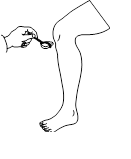
- I will see in the pre-operative area to review the plan and answer any questions that have arisen since our last visit. The leg we are operating on will also be marked by the surgical team, before we proceed to the operating room.
- You will be seen by an Anaesthetist prior to surgery. This is a good time to ask any questions concerning your anaesthetic.
- From the pre-operative area, you will be moved into the Operating Room where the Anaesthetist and your Doctor will perform your surgery.
- The ice compression device will be applied to your knee when in the operating room (so make sure it goes with you to surgery).
AFTER YOUR SURGERY
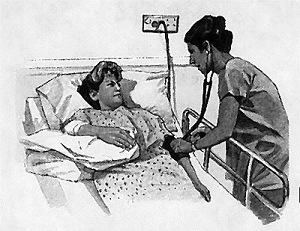
DISCHARGE INFORMATION
Your knee will be swollen and somewhat uncomfortable for a period of time after your operation. This is normal. Elevate your leg and apply your ice compression device (re-circulate water every hour you are awake) to reduce swelling. If you did not get an ice compression device, apply crushed ice in a zip lock bag for 15 minutes out of each hour.
1. Medications You will be discharged with a prescription for pain medication and an anti-inflammatory medication. This will be more effective if tak en regularly to get a steady level into the blood stream. Pain can be further controlled by the use of ice to the knee. If the leg hands down, the pain will be much worse. If you have a reaction to the pain medication, or if you are unable to reasonably control the pain, call your Doctor’s office.
2. Bandage You will have a bandage on your knee. There will also be a compression stocking from toe to thigh. Ensure that this does not get wrinkled behind your knee. It does not need to be removed. Alternatively, you may have the knee wrapped in a tensor bandage which should be removed and re-wrapped daily from the midcalf to the lower thigh. This elastic bandage may also have padding under it. If the bandage feels too tight or you feel numbness and tingling in the foot, loosen the padding/bandage.
Try to leave the dressing intact, and keep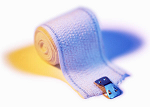 it clean and dry. Sometimes the dressing can soak through. If blood soaks through the dressing, the dressing can be changed using sterile gauze, and a lightly applied elastic wrap to hold it in place. The use of the compression stocking will help control swelling of the leg but, if you wish, may be left off at night when in bed. You can change the dressing at 48 hours to a lighter dressing. Leave the steri-strips (tapes) in place.
3. Activity You can take as much weight on the leg as you feel comfortable and it is safe to take your full weight on the leg. However, it is wise to use crutches to support the leg, as the muscles in the thigh will not work properly initially, and the leg could give way causing 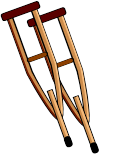 injury.
You may move the knee as much as tolerated, and early movement is encouraged (bending and straightening). In particular, full straightening (extension) of the knee is important. Do not put pillows behind the knee, which will keep the knee bent (flexed) somewhat. You do not need to use a brace on the leg (unless specifically instructed), as the brace can cause problems with excessive swelling, as it may be too tight on top of the surgical dressing.
4. Bathing If you prefer to shower, wrap plastic around the bandage and tape snugly at the top and bottom. For a tub bath, put 2-3 inches of water in the bottom of the tub and sit with your operated leg on the rim of the tub or on a footstool in the tub. If your bandage gets wet, it must be changed to prevent infection (see above).
5. If bleeding occurs, apply pressure for 10 – 15 minutes or until the bleeding stops.
6. The sensation of “splashing” of fluid in the knee is normal and will gradually disappear.
7. If you are unable to pass urine and your bladder is hurting, put warm washcloths on your lower stomach, to allow your body to relax and let the urine come out. If you continue to have difficulties, go to the Emergency Department.
8. Feeling sick to your stomach can sometimes be a problem post surgery. If you experience nausea, you can take over the counter Gravol (Dimenhydrinate) suppositories as per the package instructions.
9. Due to lack of activity and pain medication, you may experience some constipation. Try to prevent prolonged constipation by drinking lots of fluids, and eating foods that are high in fibre. If necessary, take over the counter laxatives.